A secured credit card is the most reliable way to start or rebuild credit when a regular card keeps getting declined. You put down a refundable deposit, the issuer gives you a card with a matching limit, and your monthly payment history gets reported to the credit bureaus the same way an unsecured card does. Used carefully, it can move a thin or damaged file into shape within several months. This guide explains how these cards work, which ones are worth a closer look in 2026, how to size your deposit, and how to graduate to an unsecured card without losing your deposit to fees or mistakes.
How secured cards work
With a secured card, you send the issuer a security deposit before the account opens. That deposit usually sets your credit limit dollar for dollar: a $300 deposit typically means a $300 limit. The deposit sits with the bank as collateral and is refundable. You get it back if you close the account in good standing or, with many issuers, when they later convert your account to an unsecured card.
From there it behaves like any other card. You make purchases, you receive a statement, and you pay the balance. The key difference is risk for the bank: because your own money backs the line, issuers approve applicants with no credit history or past defaults who would not qualify for an unsecured card.
What actually builds your credit is the reporting. Reputable secured cards report your balance and payment status to the three major bureaus every month. On-time payments and low balances push your score up over time. Miss a payment and the damage lands on your report just like it would on any account, so a secured card is a tool, not a shortcut.
- Refundable deposit — collateral, not a fee; you get it back when the account is closed properly or upgraded.
- Reports to all three bureaus — confirm this before applying; a card that does not report cannot build credit.
- Real interest applies — carrying a balance still costs you, so pay in full when you can.
Best secured cards compared
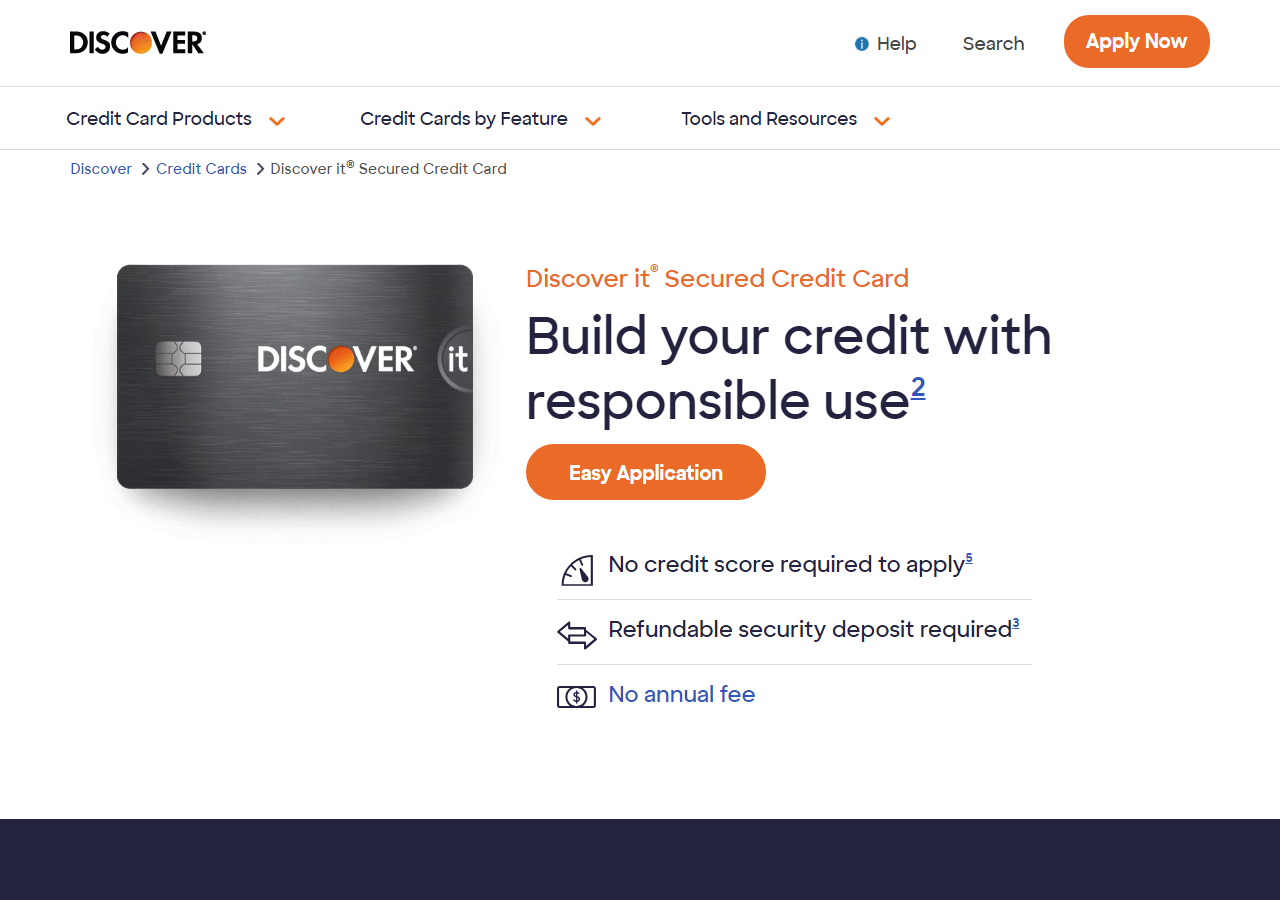
The strongest secured cards in 2026 share three traits: no or low annual fee, reporting to all three bureaus, and a clear path to an unsecured card. Specific rewards rates, deposit minimums, and fees change, so treat the table below as a feature map and confirm current terms on each issuer's page before you apply.
| Card | Annual fee | Rewards | Graduation path |
|---|---|---|---|
| Discover it Secured | Typically none — verify | Cash back on purchases | Automatic reviews to unsecured |
| Capital One Platinum Secured | Typically none — verify | None on most versions | Account reviews for upgrade |
| Bank-issued secured (varies) | Varies | Often none | Depends on issuer |
Two reasons these tend to top the list: a secured card that earns cash back lets your rebuilding period pay for itself a little, and an issuer with a documented upgrade process means you are not stuck reapplying later. If you are choosing among options aimed at damaged credit specifically, our roundup of credit cards for bad credit in 2026 covers unsecured alternatives some applicants qualify for too.
Deposit size and credit limit
Your deposit usually equals your starting limit, so the amount you put down has two effects at once. A larger deposit gives you more room to spend, and a higher limit can help your credit utilization ratio — the share of your limit you are using — which is one of the biggest factors in your score.
That does not mean bigger is always better. Put down only what you can leave parked with the bank without needing it. A common, manageable approach:
- Choose a deposit you can comfortably set aside — many cards start as low as $200 to $300.
- Use the card for one or two small recurring charges, like a streaming subscription.
- Keep the reported balance well under the limit, ideally under 30 percent, and pay it off each month.
Some issuers let you add to your deposit later to raise the limit, and a few periodically grant credit-line increases without new money once you have shown steady payments. The goal is a limit large enough that normal use keeps utilization low — not a limit so large the deposit strains your budget. For a full walkthrough of habits that move the needle, see how to build credit with a credit card.
Graduation to unsecured
Graduation is when the issuer converts your secured account into a standard unsecured card and refunds your deposit. This is the payoff of the whole process, and the best secured cards make it routine rather than a fight.
Issuers differ in how they handle it. Some run automatic account reviews after a set number of months of on-time payments and upgrade qualifying accounts on their own. Others require you to ask, or they open a separate unsecured account and let you close the secured one. A few do not graduate at all, which is a reason to favor cards with a stated upgrade path from the start.
To put yourself in the best position to graduate:
- Pay on time every month — set up autopay for at least the minimum as a safety net.
- Keep utilization low and avoid maxing out the card right before a review.
- Give it time; many programs look at roughly six to twelve months of history before upgrading, though timelines vary by issuer.
When you graduate, your deposit comes back and your positive payment history stays on your report. If the issuer opens a new unsecured account instead of converting the old one, think twice before closing the original — keeping it open preserves your account age, which helps your score.
Mistakes while rebuilding
Most setbacks with secured cards come from a handful of avoidable errors:
- Carrying a balance to "build credit." You do not need to pay interest for your account to report. Paying in full builds credit and costs nothing extra.
- Choosing a card that does not report to all three bureaus. A non-reporting card is just a prepaid-style spending tool; it will not raise your score.
- Paying upfront fees you could avoid. Some products aimed at rebuilders pile on application or monthly fees. A solid secured card from a major issuer usually does not need them.
- Running the balance to the limit. High utilization drags your score down even when you pay on time. Keep reported balances low.
- Applying for several cards at once. Each application can ding your score and looks risky while you are rebuilding. One card used well beats three opened in a hurry.
- Closing the account too soon. Once you graduate, keeping the line open helps your average account age. Close only if a fee makes it not worth holding.
Common questions
Do I get my deposit back?
Yes, the security deposit is refundable. You typically get it back when you close the account in good standing or when the issuer graduates you to an unsecured card. You do not get it back while the account is open and active, since it is acting as collateral.
How long until my credit improves?
Many people see meaningful movement within about six to twelve months of on-time payments and low balances, though results depend on the rest of your credit profile. There is no fixed number — the score reflects your whole history, not just one card.
Is a secured card better than a prepaid or debit card for building credit?
For building credit, yes. Prepaid and debit cards spend your own money but are not loans and generally are not reported to the credit bureaus, so they do nothing for your score. A secured card reports your payment behavior, which is what builds credit.
Can I be denied a secured card?
It is possible. Secured cards are easier to get than unsecured ones, but issuers may still decline applicants for reasons like a recent bankruptcy, an inability to fund the deposit, or unverifiable identity. If one issuer declines you, another may approve you, so check the specific requirements on each issuer's site.
Last updated: June 2026. Rates, fees, and issuer rules change — confirm current terms before you apply or transfer a balance. This is general information, not personal financial advice.
Tired of receiving your unsolicited mail, time for you to cease sending your mail. If I need a credit card I will ask for it on my own time.
hey there.. please call capital one at 1-877-383-4802 and tell them you would like your information removed from their system and no more mailings