A low credit score does not lock you out of credit cards — it just changes which doors are open. If your score sits in the bad or limited-history range, the realistic path in 2026 is a secured card: you put down a refundable deposit, use the card like any other, and let on-time payments do the slow work of rebuilding. This guide explains how secured cards function, which ones tend to suit people starting over, the two habits that move your score the most, and how to avoid the high-fee products that profit from desperation.
Secured cards and how deposits work
A secured card looks and spends like a normal credit card, but you fund a security deposit before the account opens. That deposit usually sets your credit limit — put down $300 and you typically get a $300 line. The issuer holds the money in case you stop paying; if you close the account in good standing or graduate to an unsecured card, you get it back.
The deposit is not a fee and it is not a prepaid balance you spend down. You still receive a monthly statement, you still owe what you charged, and you still pay interest if you carry a balance. The point of the deposit is to lower the issuer's risk enough that they will report your activity to the three major credit bureaus — which is the entire reason you are doing this. If a card does not report to all three bureaus, it is close to useless for rebuilding. For a deeper walk-through of the scoring factors behind all of this, see our credit scores guide.
- Refundable deposit — your money, returned when you close or graduate in good standing.
- Reports to all three bureaus — Equifax, Experian, and TransUnion. Non-negotiable.
- A clear graduation path — the issuer reviews your account and may move you to an unsecured card.
- Low or no annual fee — you should not pay heavily for the privilege of rebuilding.
Best secured cards compared
The cards below are the ones most often recommended for rebuilding because they report to all three bureaus, charge little or nothing in annual fees, and have a track record of graduating customers to unsecured products. Specific reward rates, deposit minimums, and fees change over time, so confirm current terms on each issuer's page before you apply. We also keep a fuller roundup in our best secured credit cards comparison.
| Card | Why it stands out | What to verify |
|---|---|---|
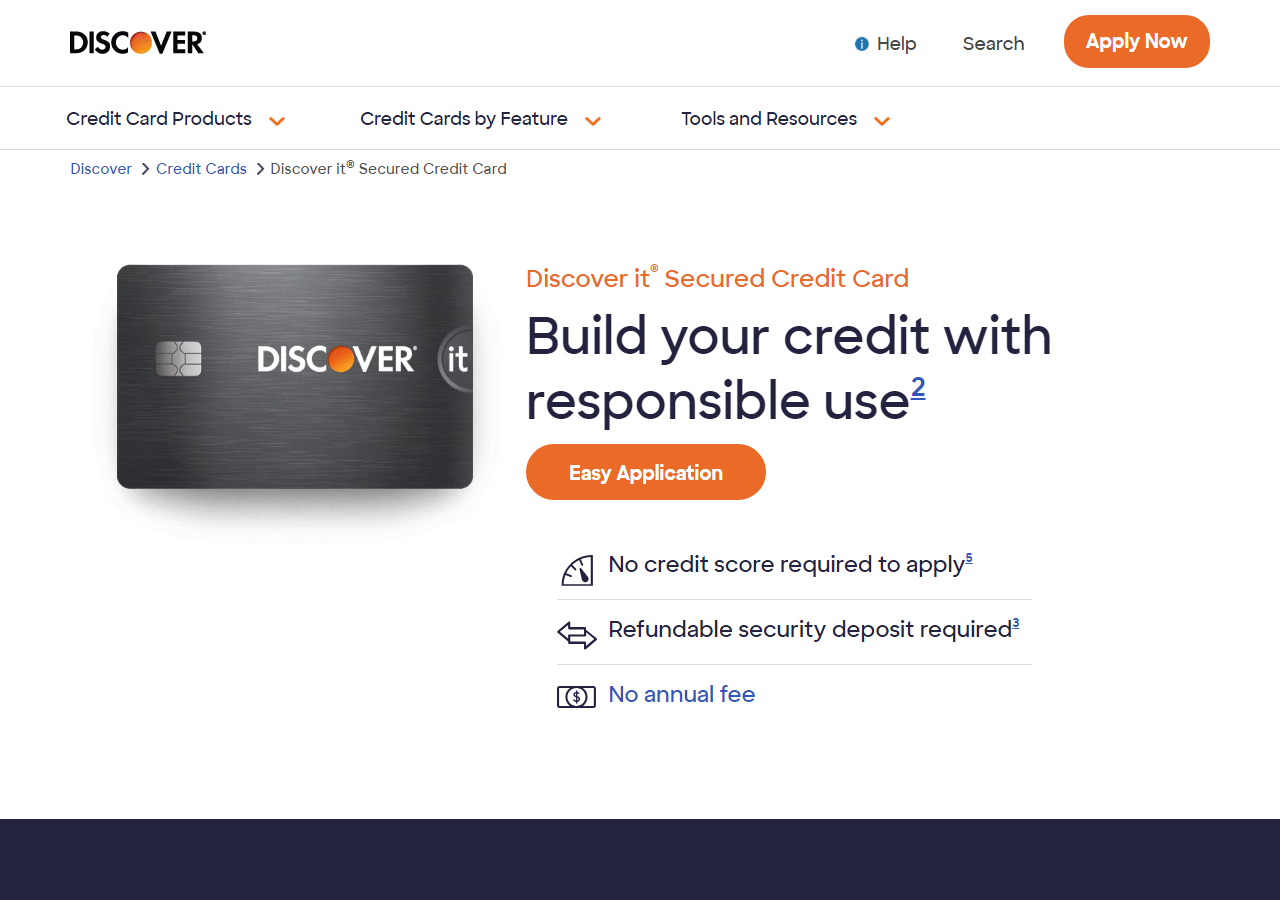
| Discover it Secured | Earns rewards on everyday spend and reviews accounts for graduation; reports to all three bureaus. | Current reward categories and minimum deposit on discover.com. |
| Capital One Platinum Secured | Some applicants qualify for a credit line larger than their deposit; clear upgrade path within Capital One. | Deposit amount you are offered and whether an annual fee applies. |
| Bank-issued secured cards | Useful if you already bank somewhere and want one relationship for checking and rebuilding. | That it reports to all three bureaus — not every bank card does. |
Notice what these have in common: a refundable deposit, all-three-bureau reporting, and either no annual fee or a small one. A secured card that earns a little cash back is a nice bonus, but rewards are secondary while rebuilding. The job of this card is to generate a clean payment record, not to fund travel.
On-time payments and utilization while rebuilding
Two habits drive most of your score movement, and both are within your control.
Pay on time, every time. Payment history is the single largest scoring factor. One missed payment can undo months of progress and stays on your report for years. The simplest defense is autopay set to at least the minimum, plus a calendar reminder a few days before the due date so you can pay the full balance manually.
Keep utilization low. Utilization is the share of your limit you are using. On a $300 secured card, a $250 balance is 83% utilization — that looks risky to a scoring model even if you pay it off later. Aim to keep reported balances under 30%, and ideally under 10%, of your limit.
- Charge one small recurring bill — a streaming subscription or your phone plan — and nothing else.
- Set autopay for the full statement balance so you never carry interest.
- If you want even lower reported utilization, make a payment before the statement closes, not just before the due date.
Carrying a balance does not help your score, despite a stubborn myth that it does. Paying interest is a cost, not a credit-building tactic.
When to graduate to unsecured rewards cards
Graduating means the issuer converts your secured card to an unsecured one and returns your deposit, usually after several months to a year of on-time payments and low utilization. Some issuers do this automatically with periodic account reviews; others expect you to ask.
Signs you may be ready:
- Six to twelve months of on-time payments with no late marks.
- Utilization consistently in the low range.
- A score that has climbed out of the bad range into fair or good.
Once your score recovers, you can look at mainstream no-annual-fee cards that earn real rewards without a deposit. Resist the urge to chase a premium travel card the moment you qualify — a simple flat-rate cash-back card you pay in full each month does more for your finances than an expensive card you struggle to justify.
Hard inquiries while rebuilding — apply sparingly
Every formal credit card application usually triggers a hard inquiry, which can shave a few points off your score and stays on your report for about two years. A point or two is minor on its own, but a cluster of applications in a short window signals risk and can stall your progress.
While rebuilding, apply with intent rather than hope:
- Pick one secured card you are confident you will be approved for, and apply for that one.
- Use pre-qualification tools when available — they use a soft pull that does not affect your score.
- Do not apply for a new card every time your score ticks up; give each account time to season.
Spacing applications out, paying on time, and keeping balances low is unglamorous, but it is the method that actually works. Predatory "bad credit" cards with steep monthly maintenance fees and tiny limits are the trap to avoid — a low-fee secured card from a major issuer does the same job for far less.
Common questions
Will a secured card really raise my credit score?
It can, as long as the card reports to all three bureaus and you pay on time while keeping utilization low. The deposit itself does nothing for your score; your payment behavior does. Most people see gradual improvement over several months of consistent use.
Do I get my deposit back?
Yes. The deposit is refundable when you close the account in good standing or when the issuer graduates you to an unsecured card. It is not a fee. The only way to lose it is to default and let the issuer apply it to an unpaid balance.
How long until I can switch to a regular card?
Timelines vary by issuer, but many review accounts somewhere between six months and a year. The strongest candidates have a spotless payment record and low reported balances. If your issuer does not graduate you automatically, it is worth asking.
Should I avoid cards advertised specifically for bad credit?
Be cautious. Some unsecured "bad credit" cards pile on application fees, monthly maintenance charges, and very low limits. A no-annual-fee or low-fee secured card from a well-known issuer usually rebuilds credit just as effectively without draining you on fees. Always compare the full fee schedule on the issuer site.
Last updated: June 2026. Rates, fees, and issuer rules change — confirm current terms before you apply or transfer a balance. This is general information, not personal financial advice.
Tired of receiving your unsolicited mail, time for you to cease sending your mail. If I need a credit card I will ask for it on my own time.
hey there.. please call capital one at 1-877-383-4802 and tell them you would like your information removed from their system and no more mailings