American Express sells two cash-back cards built around the same household: the Blue Cash Preferred and the Blue Cash Everyday. They look similar on the surface, but one charges an annual fee to buy you a higher grocery rate, and the other earns less while costing nothing to hold. The right pick comes down to a single number you can calculate from your own statements: how much you spend at U.S. supermarkets each year. Exact reward rates, caps, and any annual fee can change, so treat the figures below as the long-standing structure and confirm current terms on the Amex pages before you apply.
Blue Cash Preferred — 6% supermarkets
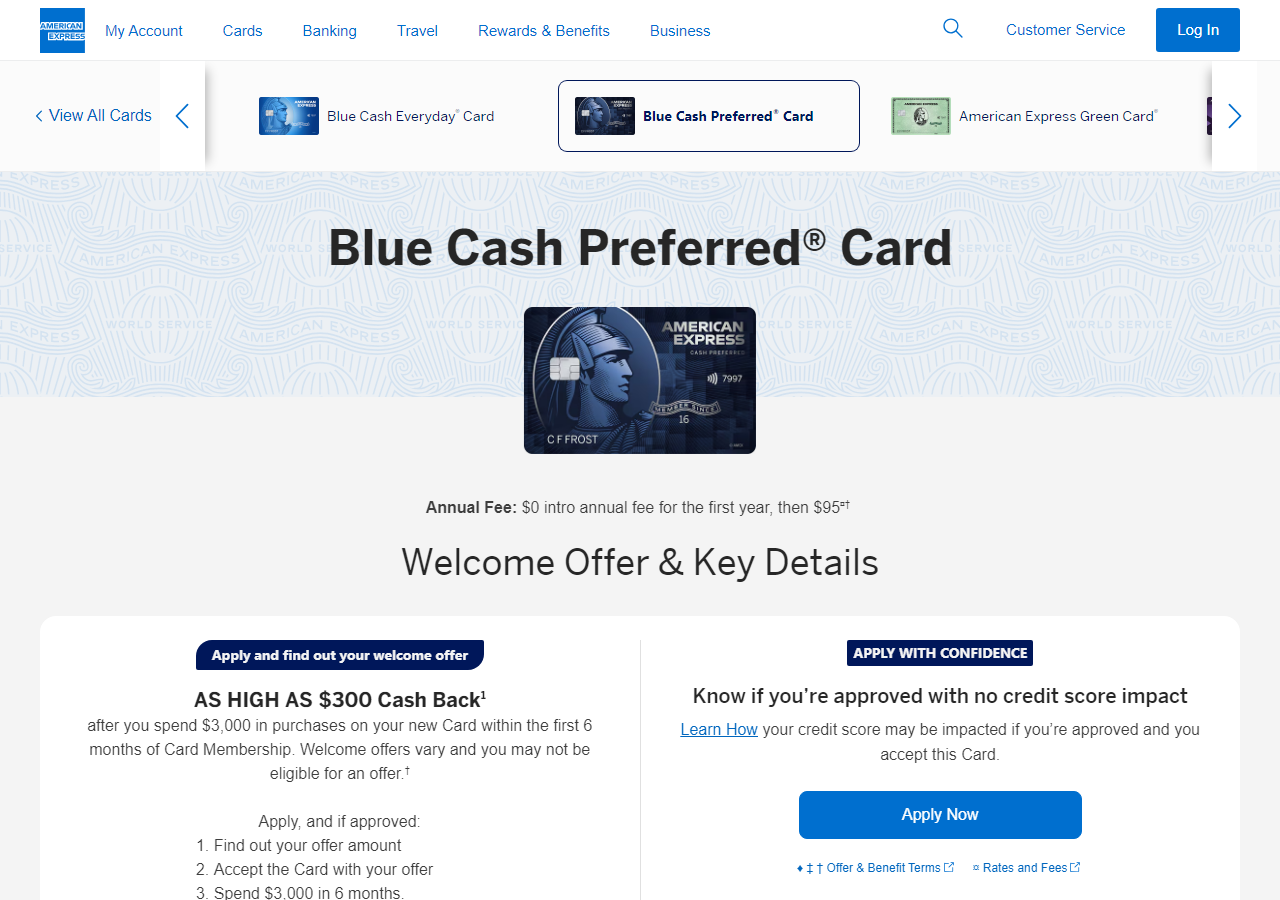
The Blue Cash Preferred is the grocery-heavy member of the pair. Its headline rate is 6% cash back at U.S. supermarkets, but that top rate applies only up to an annual spending cap; spending past the cap earns a lower flat rate. It has historically paired that with elevated rates on select U.S. streaming services and on transit, and a base rate on everything else. The catch is an annual fee, sometimes waived or reduced for the first year on certain offers.
Because the 6% rate is capped, the card rewards a specific profile: a family that reliably fills a cart at the supermarket every week. If your grocery spend is high and steady, the extra percentage points can outrun the annual fee several times over. If your spending is light or seasonal, you may pay the fee without earning enough back to justify it.
- Best for: households with consistent, sizeable supermarket bills.
- Watch: the annual grocery cap and the lower rate that kicks in above it.
- Bonus categories: streaming and transit have historically been part of the lineup — verify the current list.
Blue Cash Everyday — no annual fee

The Blue Cash Everyday strips out the annual fee and lowers the supermarket rate to 3%, also subject to an annual cap, with a base rate on non-category spending. Over the years Amex has rotated the secondary categories on this card, often including U.S. online retail and U.S. gas stations at the same 3% tier. The trade-off is straightforward: you give up the highest grocery rate in exchange for not paying to keep the card open.
This is the safer default for moderate spenders. Even if your grocery total is unremarkable, every dollar of cash back is pure gain because there is no fee to claw back first. It also makes a sensible long-term keeper — a no-fee card you can hold indefinitely to support your credit history without an annual cost.
Break-even spend on grocery rewards
The decision between the two cards is a break-even problem. The Preferred earns more per grocery dollar (6% vs 3%, a 3-point edge), but it charges an annual fee. You need enough grocery spending for that 3-point edge to cover the fee before the Preferred pulls ahead.
The math is simple: divide the annual fee by the rate difference. If the fee were $95 and the rate gap is 3% (0.03), the break-even is roughly $95 ÷ 0.03 ≈ $3,167 in supermarket spending per year, or about $264 a month, before the Preferred starts beating the Everyday on groceries alone. Plug in the current fee and rates yourself, because both can shift.
| Feature | Blue Cash Preferred | Blue Cash Everyday |
|---|---|---|
| U.S. supermarket rate | 6% (up to annual cap) | 3% (up to annual cap) |
| Annual fee | Yes (sometimes waived year one) | None |
| Other 3% categories | Streaming, transit (verify) | Online retail, gas (verify) |
| Best fit | High, steady grocery spend | Light to moderate spend, fee-averse |
Remember that the secondary categories and the cap also feed into the comparison. If you spend heavily on streaming and transit, the Preferred widens its lead beyond the grocery break-even. If those categories don't apply to you, judge the cards on groceries plus the fee. For a wider view of grocery-focused options, see our roundup of the best credit cards for groceries in 2026.
Supermarket MCC rules
A frequent surprise: the 6% and 3% supermarket rates only apply at merchants Amex classifies as U.S. supermarkets, and that classification follows the merchant category code (MCC) assigned by the payment network, not the sign on the door. Several large retailers that sell groceries do not code as supermarkets.
- Warehouse clubs (such as Costco or Sam's Club) generally do not code as supermarkets.
- Superstores like Walmart and Target usually code as discount or department stores, not supermarkets.
- Groceries bought inside a non-supermarket merchant typically earn only the base rate.
- Some delivery and online grocery services may not code as supermarkets either.
If much of your food shopping happens at a warehouse club or superstore, the Preferred's 6% may apply to a smaller slice of your spending than you assume — which pushes the break-even higher. Check where you actually shop before betting on the higher rate.
Which card to open first
If you're choosing one card to start, the Everyday is the lower-risk entry point. It costs nothing to hold, earns a solid 3% on groceries, and works as a permanent keeper. You can always step up to the Preferred later once you've confirmed your supermarket spend clears the break-even.
Pick the Preferred first if you already know your grocery bills are large and steady at qualifying supermarkets, and you'll use the streaming or transit categories. In that case the fee pays for itself early in the year. Some households even hold both over time, putting groceries on the Preferred and routing other category spend to the Everyday. For where these fit in the broader Amex lineup, compare them against the rest in our guide to the best American Express card.
- Pull a year of statements and total your U.S. supermarket spend.
- Subtract any spending at warehouse clubs and superstores that won't code as groceries.
- Compare the adjusted total to the break-even figure for the current fee.
- Above the line, lean Preferred; below it, the Everyday usually wins.
Common questions
Is the Blue Cash Preferred worth the annual fee?
It depends on your qualifying grocery spend. Once your supermarket purchases clear the break-even point (annual fee divided by the rate difference), the higher 6% rate earns back the fee and then adds profit. Below that threshold, the no-fee Everyday usually nets more.
Do both cards cap the grocery cash-back rate?
Yes. Both apply the elevated supermarket rate only up to an annual spending cap, after which purchases earn a lower flat rate. The caps and rates can change, so confirm them on the card pages before counting on a number.
Why didn't my grocery purchase earn the bonus rate?
The reward is tied to the merchant's category code. Warehouse clubs and superstores typically don't code as U.S. supermarkets, so groceries bought there usually earn only the base rate even though you bought food.
Can I hold both Blue Cash cards at the same time?
Amex's card-count and one-bonus-per-card rules govern this, and they change. Some people do carry both to mix categories, but check the current eligibility terms on the issuer site before applying for the second card.
Last updated: June 2026. Rates, fees, and issuer rules change — confirm current terms before you apply or transfer a balance. This is general information, not personal financial advice.
Tired of receiving your unsolicited mail, time for you to cease sending your mail. If I need a credit card I will ask for it on my own time.
hey there.. please call capital one at 1-877-383-4802 and tell them you would like your information removed from their system and no more mailings