A credit freeze is the strongest free tool you have to stop someone from opening accounts in your name. It blocks new lenders from pulling your credit file, which means a thief can't get a card or loan approved even if they have your Social Security number. Federal law makes freezing and unfreezing free at all three major bureaus, and you control it yourself online. The trade-off is small but real: you have to remember to thaw your file before you apply for credit. Here's how each piece works and how to time it around a card application.
What a credit freeze does
When your file is frozen, the bureau restricts access to your credit report. Most lenders won't approve a new application without seeing that report, so a frozen file effectively pauses new-account approvals — including ones a fraudster tries to open. It does not affect your credit score, and it does not stop you from using cards or loans you already have.
A freeze also doesn't block everyone. Companies you already do business with, certain government agencies, and your existing creditors can still see your file for account review or collections. You can still get your own free reports, and you can still apply for credit yourself once you temporarily lift the freeze.
- Does not change: your score, your existing accounts, your ability to make payments.
- Does block: most new lenders pulling your report, which is how new-account fraud is stopped.
- Is free: to place, to lift temporarily, and to remove permanently — at all three bureaus.
If you want to understand how lenders read the file you're locking down, our guide to credit scores covers what's actually inside a report.
Freeze at each bureau — free
There are three nationwide bureaus, and a freeze at one does not carry over to the others. To be fully protected you have to freeze all three. Each runs its own free portal where you create a login, verify your identity, and toggle the freeze on.
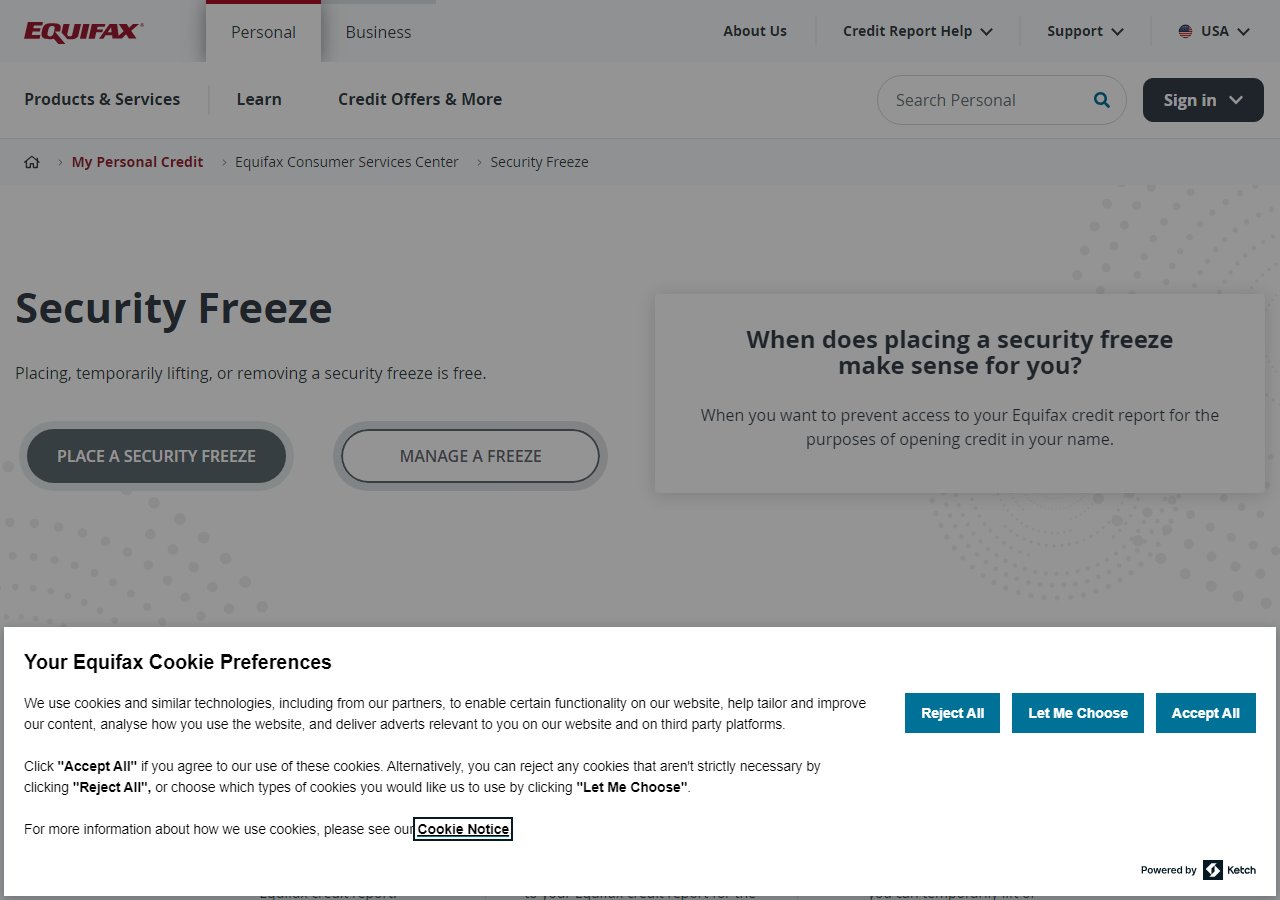
| Bureau | Where to freeze | Cost |
|---|---|---|
| Equifax | equifax.com credit freeze page | Free |
| Experian | experian.com freeze center | Free |
| TransUnion | transunion.com service center | Free |
The typical steps at each bureau:
- Go to the bureau's official site and find the credit freeze or security freeze section.
- Create an account and verify your identity (they'll ask security questions based on your history).
- Place the freeze. You may receive a PIN or be told to manage everything through your login — keep whatever they give you.
- Repeat for the other two bureaus.
You can also call each bureau by phone if you'd rather not do it online, and a freeze must be active within one business day of an online or phone request under federal rules. Always start from the bureau's own domain — don't follow links from emails — and confirm the exact terms on the issuer's site, since portal layouts change.
How to thaw before a card application
Because a freeze blocks most new applications, you need to "thaw" (temporarily lift) your file before you apply for a credit card, loan, or anything else that triggers a credit pull. Thawing is free and fast — usually effective within an hour when you do it online.
The catch is knowing which bureau to lift. Most issuers pull from one specific bureau, sometimes two, depending on the card and your state. If you guess wrong, the application stalls. Practical approach:
- Lift all three for a short window if you're not sure which bureau the issuer uses. You can re-freeze the moment you're approved.
- Use a date-range thaw if the portal offers it — schedule the file to refreeze automatically after a few days.
- Apply, then re-freeze. Don't leave files thawed longer than you need.
If you're targeting a specific card, check the score range first — for example, our note on the score you need for Chase Sapphire — so you only thaw when you have a real shot at approval.
Freeze vs fraud alert
A fraud alert is a lighter-weight option. It tells lenders to take extra steps to verify your identity before approving credit, but it does not block access to your file the way a freeze does. You only set a fraud alert at one bureau and it propagates to the others.
| Credit freeze | Fraud alert | |
|---|---|---|
| Blocks new lender access? | Yes | No — adds a verification step |
| Set at how many bureaus? | All three separately | One; it spreads to the others |
| Cost | Free | Free |
| Duration | Until you remove it | One year (extended alert lasts longer) |
| Friction for you | Must thaw before applying | Minimal |
If you've been a victim of identity theft or you're not planning to open accounts soon, a freeze is the stronger choice. A fraud alert suits someone who wants a warning layer without managing thaws. You can use both at once.
When freezing is worth it
A freeze makes the most sense if your data has been exposed in a breach, if you've spotted accounts you don't recognize, or if you simply don't plan to apply for credit in the near term. It's also worth setting up for children and elderly relatives, who are common identity-theft targets and rarely need to open new credit.
It's less convenient if you're in an active card-application phase — chasing welcome offers or rebuilding credit — because every application means a thaw. Even then, many people freeze permanently and just thaw the right bureau for a day or two when they apply. Given that it's free and reversible, the cost of freezing is mostly the few minutes of setup and the habit of thawing before you apply.
Common questions
Does freezing my credit hurt my score?
No. A freeze restricts who can view your report; it has no effect on the score itself. Your score moves based on payments, balances, and account age — not on whether the file is frozen.
Do I have to pay to freeze or unfreeze?
No. Federal law requires the three nationwide bureaus to place, lift, and remove freezes for free. If a site asks for payment to freeze your file, you're not on the bureau's official page.
How long does it take to thaw before applying for a card?
Online thaws are usually effective within an hour, and bureaus are required to act within an hour of an online or phone request. To be safe, lift the freeze before you submit the application rather than during it.
Will a freeze stop me from getting my own credit report?
No. You can still pull your own free reports and check your score with a freeze in place. The freeze only limits new lenders' access to your file.
Last updated: June 2026. Rates, fees, and issuer rules change — confirm current terms before you apply or transfer a balance. This is general information, not personal financial advice.

Tired of receiving your unsolicited mail, time for you to cease sending your mail. If I need a credit card I will ask for it on my own time.
hey there.. please call capital one at 1-877-383-4802 and tell them you would like your information removed from their system and no more mailings